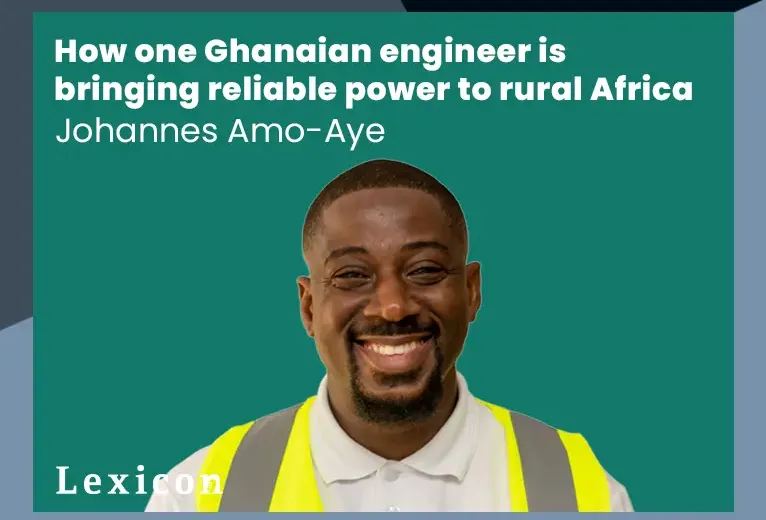
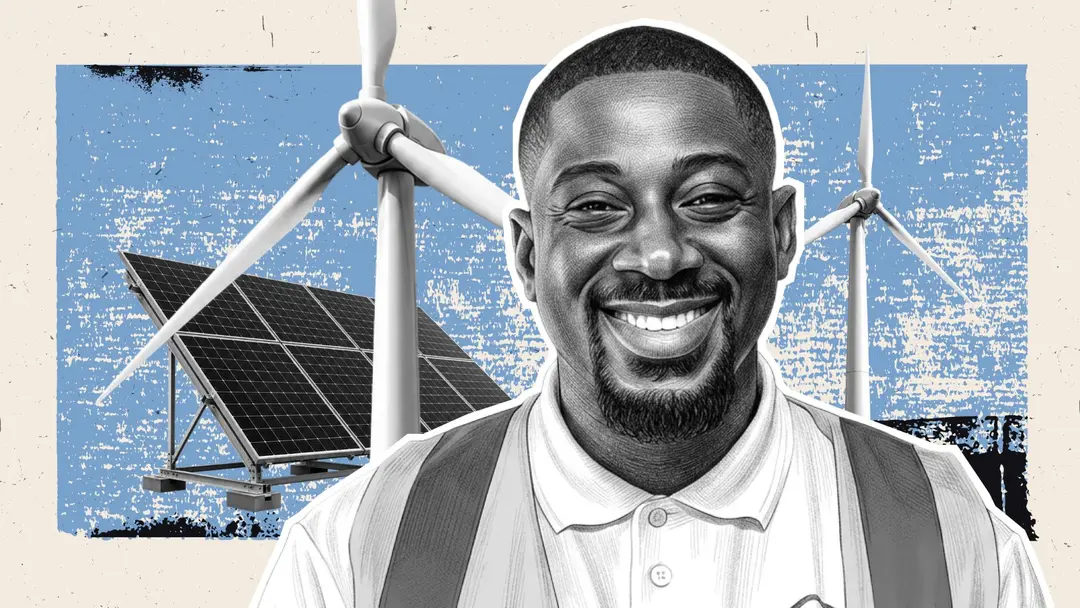
Johannes Amo-Aye (Co-founder, MINAGIE Energy) on developing hybrid wind-solar microgrids for off-grid and underserved communities across Africa.
Johannes Amo-Aye is a Ghanaian engineer, entrepreneur, and co-founder of MINAGIE Energy, a climate-tech company developing hybrid wind-solar microgrids for off-grid and underserved communities across Africa.
As part of this, and inspired by a childhood plagued by frequent power outages in Ghana, Amo-Aye created the Fusion Wind Turbine, a locally manufactured system that combines vertical-axis wind technology with solar generation to provide reliable, low-maintenance, clean energy for critical services such as healthcare and education.
This was so impactful that it featured on the 2025 Royal Academy of Engineering’s Africa Prize for Engineering Innovation shortlist.
I’m Johannes Amo‑Aye, Co‑Founder and CEO of MINAGIE Energy, a Ghanaian climate‑tech company pioneering hybrid wind‑solar microgrids. Growing up between Ghana and Nigeria, I experienced firsthand how unreliable electricity undermines healthcare and education.
The Near-Death Experience That Sparked A Clean Energy Startup
That lived reality inspired me to design the Fusion Wind Turbine (FWT) — a locally manufactured system that combines vertical‑axis wind technology with solar power to deliver 24/7 clean energy. Our work was recently recognized by the Royal Academy of Engineering in this year’s Africa Prize for Engineering Innovation shortlist, which affirms both the innovation and the impact of this solution.
IE: Growing up in Ghana, was there a particular experience or moment that convinced you reliable energy access was a problem you wanted to dedicate yourself to solving?
I grew up in South Labadi’s Otswe community, a suburb in the Greater Accra Region of Ghana, where blackouts weren’t just an inconvenience; they shaped our lives. Homework was done under the dim flicker of a candle, nights were spent sweating through 12‑ to 24‑hour outages, and every return of electricity carried both relief and anxiety because we knew it wouldn’t last. That ache stayed with me.
Later, I saw how the same energy poverty I experienced at home was sabotaging progress across rural Ghana: midwives delivering babies in the dark with only a phone torch, vaccines losing potency during outages, and students inhaling kerosene fumes just to study.
Those moments convinced me that reliable energy access wasn’t optional; it was essential for dignity, health, and opportunity.
That conviction became my calling, and it’s what led to the creation of the Fusion Wind Turbine. By harnessing both wind and solar in one system, we’re proving that Africa can solve Africa’s problems with Africa’s solutions.
Recognition like the Africa Prize shortlist affirms that this journey, born from childhood frustration, is now part of a continental movement for energy justice.