
Across Africa, engineers and entrepreneurs are redesigning renewable energy to withstand weak infrastructure, limited financing, and unpredictable conditions.
In Ghana, another form of resilience is being engineered through the work of inventor Johannes Amo-Aye, the mind behind the Fusion Wind Turbine concept. Rather than treating renewable energy sources as separate or competing systems, Amo-Aye’s approach focuses on integration.
The Fusion Wind Turbine is designed to operate alongside solar installations, providing energy during periods when solar output is low, particularly at night or during cloudy conditions. In many rural Ghanaian communities, this hybrid model offers a more stable and predictable energy supply than solar alone.
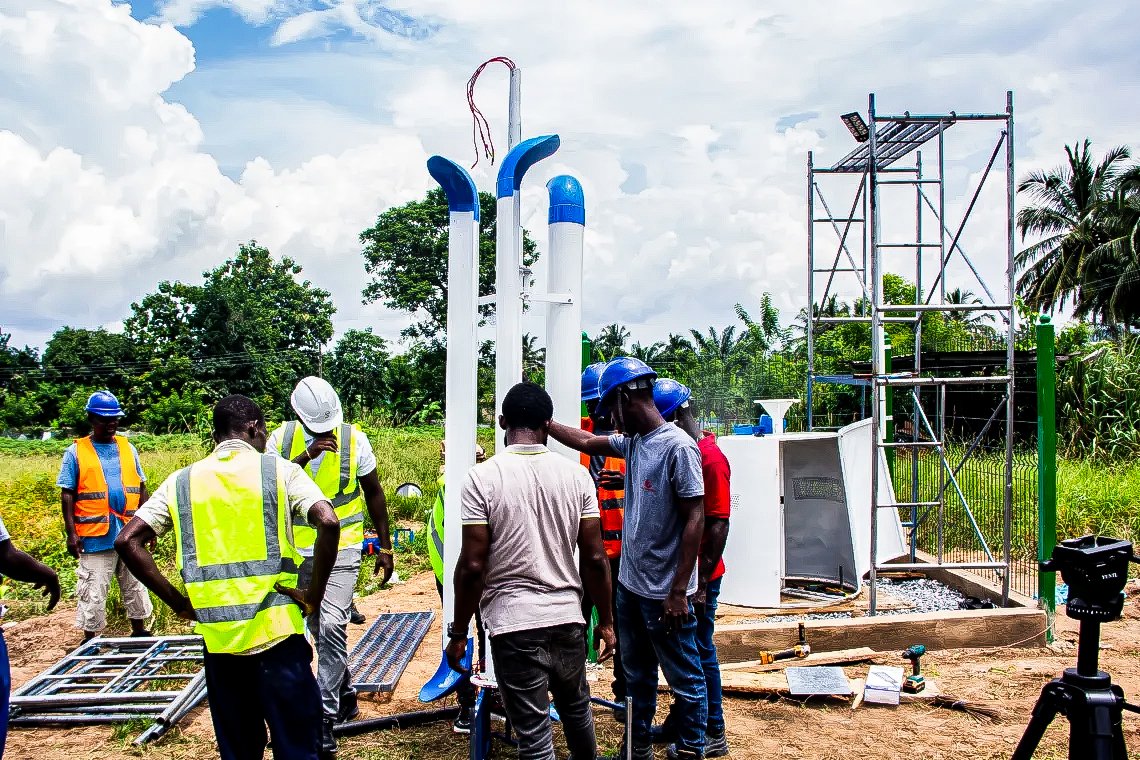
Developed through MINAGIE Energy, the system uses a gearless vertical-axis wind turbine with a solar arch to generate power across different weather conditions. It is designed to be locally repairable, quieter than diesel generators and suitable for remote settings. Around 90% of the system’s components are designed and manufactured in Ghana. Rural health centres are one clear use case. Reliable electricity supports night-time treatment, vaccine refrigeration and the safe use of medical equipment. Early installations in Ghana have replaced diesel generators, reducing fuel costs while supporting lighting and refrigeration at remote health facilities.
Fusion Wind Turbine has delivered more than 6,000 hours of clean energy at Adeiso and Asitey Health Centres in Ghana’s Eastern Region, supporting vaccine preservation and helping safeguard more than 300 maternal deliveries each year.
For small enterprises such as cold storage operators, welding shops, and agro-processing units, stability is not optional. A few hours of downtime can mean financial loss or spoiled goods. At Adeiso Health Centre alone, the system has eliminated diesel costs of around US$600 per month. MINAGIE Energy has also trained 12 technicians through its MTEDI programme, with plans to reach more than 200 young people as it scales and has secured a letter of intent to expand to Asitey Presby Primary School this year, where the system would power water infrastructure for 350 pupils and the adjacent clinic.
The innovation reflects a broader shift in thinking across Africa’s energy landscape: resilience often comes not from maximizing a single technology but from combining multiple imperfect systems into a more stable whole.